
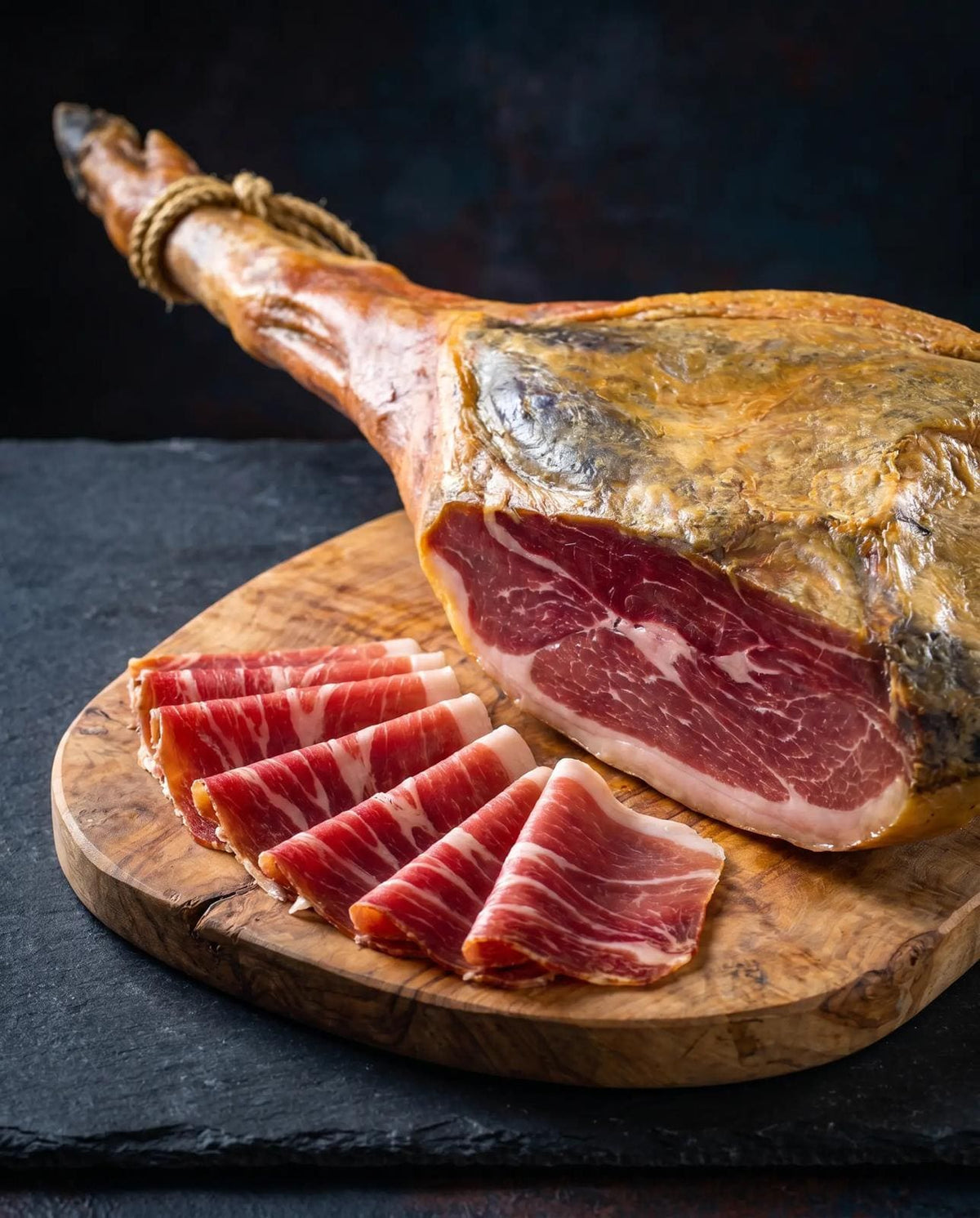
In short: Serrano comes from white pigs and carries the European TSG label. Ibérico comes from pigs of the Iberian breed. Bellota is an Ibérico fattened on acorns in the wild: the most marbled and most expensive, with a black label when it is 100% Iberian. “Pata Negra” refers to the latter.
Serrano, Ibérico, Bellota, Pata Negra: the names of Spanish hams sound alike, but the products have nothing in common, neither in taste nor in price. Here are the differences, simply explained.
Serrano ham: the white-pig ham
Serrano ham comes from white pigs of standard farmed breeds. It is the most widespread Spanish ham. It is recognised at European level as a Traditional Speciality Guaranteed, with a minimum curing time.
Everything depends on the ageing: a Serrano aged for a few months stays simple and salty, a Serrano aged 12 months becomes melt-in-the-mouth, and beyond 18 months it gains depth and nutty notes. Ours is aged 12 to 24 months depending on the format: sliced, as a 500 g taco or whole and boneless.
Ibérico ham: a different pig breed
Ibérico ham comes from the Iberian pig, an ancient breed from the peninsula, often recognisable by its black hooves. This pig has a special trait: it naturally marbles fat into the muscle. The result is marbled meat that is more tender and more aromatic than white-pig meat.
Since 2014, Spanish regulations have classified Ibérico hams with a colour-coded label, according to breed and diet:
- Black: 100% Ibérico, acorn-fed (Bellota).
- Red: crossbred Ibérico, acorn-fed (Bellota).
- Green: free-range Ibérico, fed on grain and pasture (Cebo de campo).
- White: grain-fed Ibérico (Cebo).
Bellota: the pinnacle
Bellota means “acorn” in Spanish. A Bellota ham comes from an Iberian pig fattened in the wild in the dehesa, the oak forests of south-western Spain, during the montanera, the acorn season in autumn and winter. This diet gives a very fine fat that literally melts at room temperature.
These hams are aged for a long time, often 3 years or more. Our jamón Bellota is aged 36 months.
And “Pata Negra”?
“Pata negra” means “black foot”, referring to the Iberian pig's hooves. Long used as a synonym for Ibérico ham, the term is now regulated in Spain and reserved for the top of the range: 100% Ibérico Bellota ham with a black label.
Which one to choose?
- For everyday aperitifs and tapas: a good Serrano aged at least 12 months.
- For a large table or a restaurant: a whole boneless Serrano, 12 to 14 months, or 18 to 24 months for more character.
- For an exceptional occasion or a gift: a Bellota, enjoyed on its own with nothing alongside.
How to enjoy it
Take the ham out about twenty minutes before serving: the fat should turn glossy. Slice very thin with a long, flexible knife. Serve it plain, or with tomato-rubbed bread for the Serrano.
Frequently asked questions
Is Ibérico ham always Bellota?
No. An Ibérico ham can come from a grain-fed pig (Cebo). Only Bellota is fattened on acorns.
Why is Bellota so expensive?
A rare breed, free-range farming over large areas, a seasonal diet and several years of ageing.
Is Serrano an Ibérico ham?
No, it comes from white pigs. The breed makes the difference.
Discover all our Spanish charcuterie.


Leave a comment
This site is protected by hCaptcha and the hCaptcha Privacy Policy and Terms of Service apply.