
PGI, TSG, PDO, Label Rouge, medal at the Concours Général Agricole: charcuterie labels are covered in acronyms. Some guarantee a lot, others almost nothing. Here's how to read them to buy with your eyes open.
PDO: origin and know-how, locked in
The Protected Designation of Origin is the strictest European label. Every step, from rearing to ageing, must take place in a defined geographical area, following precise specifications. In charcuterie it's found mainly in Spain, on the great Iberian hams (Guijuelo, Jabugo, Dehesa de Extremadura); in France it remains rare and PGI dominates.
PGI: guaranteed origin, at least for one step
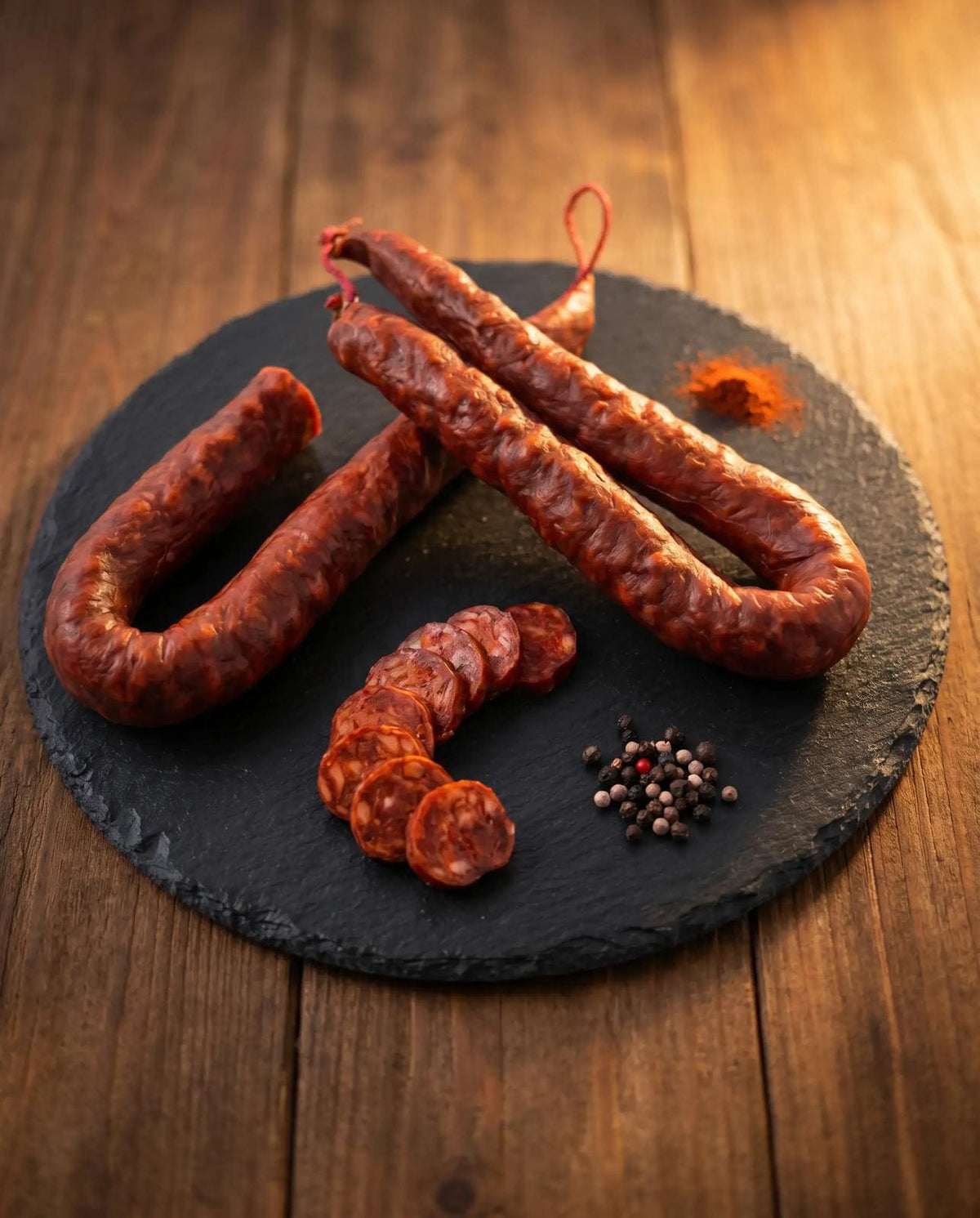
The Protected Geographical Indication guarantees that at least one key step (often processing and ageing) takes place in the area, with controlled specifications. It's the label of Auvergne ham, dried in the mountains from French pigs, of Bayonne ham, and of Chorizo Riojano, made in La Rioja to the traditional recipe, with no additives or colourings.
TSG: the traditional recipe, with no geographical area
The Traditional Speciality Guaranteed doesn't protect a place but a method. Serrano TSG ham must follow the traditional steps (salting, washing, resting, drying, ageing) and a minimum duration, but can be produced anywhere in Spain. A Serrano without TSG offers none of these guarantees.
Label Rouge: superior quality
A French label certifying a quality level above the standard, verified by taste tests. Found on some dry-cured hams and saucissons. Serious, but says nothing about origin.
Medals: the Concours Général Agricole and others
The medals of the Paris Concours Général Agricole (gold, silver, bronze) are awarded each year by blind-tasting juries. It's a genuine recognition of taste, not a label of origin. Both our dry sausages carry one, and our Auvergne farmhouse ham won gold. Beware, however, of "medals" from unknown private competitions: they don't carry the same weight.
Iberian designations: the coloured tag
In Spain, Iberian ham carries a regulated coloured tag:
- Black: 100% Iberian, acorn-fed (Bellota). The only one allowed to use the term "Pata Negra".
- Red: Iberian (50 or 75%), acorn-fed.
- Green: Iberian, free-range, mixed feed (cebo de campo).
- White: Iberian, farm-fed (cebo).
The terms that guarantee nothing
"Artisan", "traditional", "from our regions", "old-fashioned recipe": these words aren't regulated. They may be sincere, but nothing requires it. To decide, look at two things: the ingredient list (the shorter the better) and the origin of the meat, which must be stated.
Frequently asked questions
PGI or TSG, which is more demanding?
They don't guarantee the same thing: PGI the origin and local know-how, TSG the recipe. A product can combine recognised origin and a medal.
Can a saucisson be PGI?
Yes, some are (Ardèche saucisson, for example). Ours isn't, but it's handmade in Auvergne with French pork, and our dry sausages are medal winners.
How do you check a label?
The official logos (red and yellow PDO, blue and yellow PGI, blue and yellow TSG) must appear on the label with the exact name of the designation.
At SaucBack, we show labels when they exist and don't invent them when they don't. Discover our PGI Auvergne charcuterie and our PGI and TSG Spanish charcuterie.


Leave a comment
This site is protected by hCaptcha and the hCaptcha Privacy Policy and Terms of Service apply.